Three reflections on the future of health and care
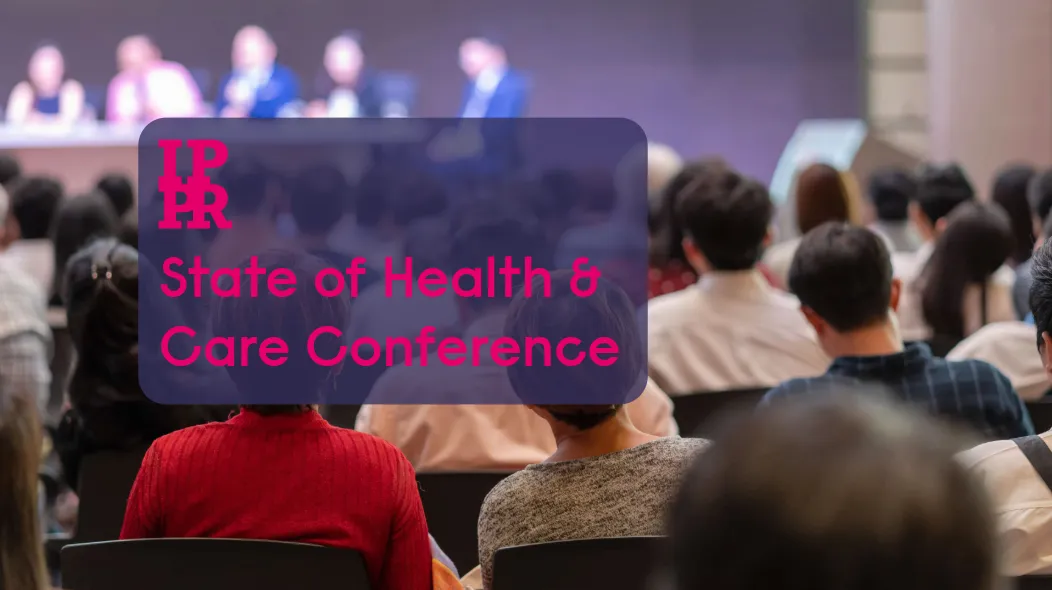
The recent IPPR State of Health and Care Conference brought together policymakers, NHS leaders and experts from across the health and care system to discuss one of the biggest challenges facing the country: how to build a healthier population while creating a sustainable health and care system for the future.
As Health Secretary James Murray recently observed, the NHS needs “not a change of course but a change of gear” – a sentiment that resonated throughout the discussions, where the focus was less on redefining priorities and more on how to accelerate delivery. There were three key themes that emerged from the day's discussions:
1 - Prevention is becoming the priority, but the system is still built around treatment
One of the strongest messages from the conference was that the direction of travel is increasingly clear. Across government and the NHS there is growing recognition that improving population health means intervening earlier, preventing ill health and supporting people within their communities rather than relying on hospital-based care.
There was strong support for neighbourhood health, early years intervention and helping people stay healthier for longer. However, speakers were equally candid about the barriers to making that shift happen.
Funding models, incentives and service design continue to prioritise acute and secondary care. Resources cannot simply be moved into prevention until demand for treatment begins to fall, creating what many described as a difficult transition. The ambition is clear, but delivery will depend on organisations that can demonstrate how prevention reduces demand elsewhere in the system.
2 - Integration remains the biggest challenge
If there was one issue that cut across almost every session, it was fragmentation.
Whether discussing NHS services, social care, employment support or community provision, speakers repeatedly highlighted how disconnected systems continue to frustrate both professionals and the people they serve.
Examples ranged from “professional tribalism” within healthcare to poor data sharing between organisations, people having to repeat the same information multiple times, and a gap between national policy ambitions and people’s everyday experience.
The message was that integration is about far more than organisational structures. It depends on organisations sharing information, working towards common outcomes and building a culture of collaboration around the individual.
Ultimately, effective integration requires what one speaker described as a “single version of the truth” – with people experiencing joined-up support rather than disconnected services.
3 - Health, work and communities are increasingly inseparable
Perhaps the most striking theme was how closely health policy is now becoming linked with economic participation and community wellbeing.
The conference repeatedly returned to the relationship between health and work, with growing concern over rising economic inactivity driven by poor health. Alongside this came a broader discussion about the role of employers, local communities and voluntary organisations in improving health outcomes. Mental health, workplace wellbeing and community assets were all recognised as essential parts of the solution. Increasingly, employers are being viewed not simply as stakeholders, but as delivery partners capable of supporting healthier, more productive working lives.
This reflects a wider shift in thinking: improving health is no longer seen solely as an NHS responsibility, but as a shared endeavour across public services, employers and local communities.
Looking ahead, the conference highlighted that the future of health and care will be shaped not by any single organisation, but by stronger collaboration across the public, private and voluntary sectors. Success will depend on turning shared ambition into joined-up delivery that improves outcomes for people while creating a more sustainable system.